






What is mechanisation like in different world regions? Which challenges do farmers face in Latin America,
-CIMMYT
In this report, agriculture experts from the International Maize and Wheat Improvement Center (CIMMYT) call for intensively scaling up climate-resilient seeds and climate-smart innovations.
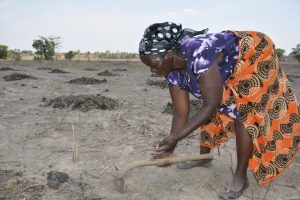
Prepared By: Frédéric Baudron and Rahel Assefa, International Maize and Wheat Improvement Centre (CIMMYT)
Co-authors/ contributors/ collaborator: Bisrat Getnet, David Kahan, Djalalie Itana, Girma Moges, John Blackwell, John Sariah, Moti Jaleta, Pascal Kaumbutho, Paswel Marenya, Raymond Nazare, Saidi Mkomwa
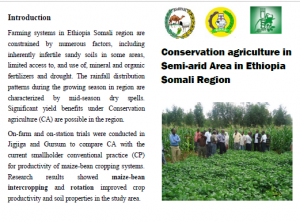
Manual about the farming systems in Ethiopia-Somali region and expected benefits under Conservation agriculture.
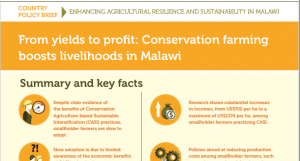
Learn about the economic returns achieved by farmers who moved away from traditional farming systems to CA-based farming.
This is a step-by-step guide to conservation farming by use of rip-lines.

African International Journal of Agricultural Resources, Governance and Ecology
Authors: Alfred Micheni, David Mburu, Fred Kanampiu, Njue Mugai, Francis Kihanda
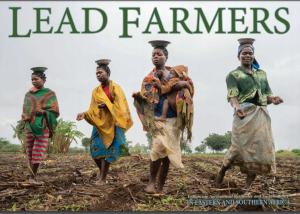
-CIMMYT A new book draws on experiences of men and women farmers across eastern and southern Africa
An objective by objective review of SIMLESA’s achievements in Rwanda.